In the world of the oil and gas industry, there are different fields and areas all of which are important to this global sector. With the advances in technology, in every of these parts, different innovations have been implemented. Here, the new technologies in the upstream petroleum industry are discussed; however, first, we should define the upstream petroleum industry.
What is upstream in the oil and gas industry?
Upstream field in the petroleum sector is a vital stage of oil and gas production. It includes production processes with a focus on exploration, drilling, and extraction of crude oil and natural gas from underground reservoirs. Upstream represents the first stages of operations, where companies engage in activities aimed at locating and accessing petroleum reservoirs. Although it is believed that the oil and gas industry is notoriously slow to innovate and adopt new technologies, actually, in the past 30 years the industry has managed to push the borders of science and technology. Some new innovations that are used in the petroleum sector are discussed here.
New technologies in the upstream petroleum industry
Hydraulic fracturing
Hydraulic fracturing, which is also called fracking, is a revolutionary technique that these days has become common in the oil and gas industry. It helps extract oil and gas from unconventional reservoirs. This process involves injecting a high-pressure fluid mixture into the oil well to create fractures in the rock formations which helps release oil and gas. Hydraulic fracturing is one of the significant upstream innovations since 1999, which has had a transformative impact on unlocking vast reserves of shale gas and tight oil. These reservoirs were previously deemed uneconomical to access.
By fracturing the rock formations and increasing permeability, fracking enables the efficient extraction of oil and gas from unconventional reservoirs. This method has revolutionized the energy landscape and contributed to the boom in production over the past three decades.
Deepwater exploration
The process of searching for and extracting oil and gas reserves located beneath the ocean floor has always been complex and it was out of reach to do such things. However, deepwater exploration can ease this even at significant water depths. Deepwater exploration involves drilling wells in water depths exceeding 500 feet (152 meters). It represents a significant technical challenge because of the harsh environmental conditions, including high pressures, low temperatures, and harsh seawater. Deepwater exploration plays a crucial role in supplementing conventional oil and gas production, particularly as global demand continues to rise and traditional reserves decline.
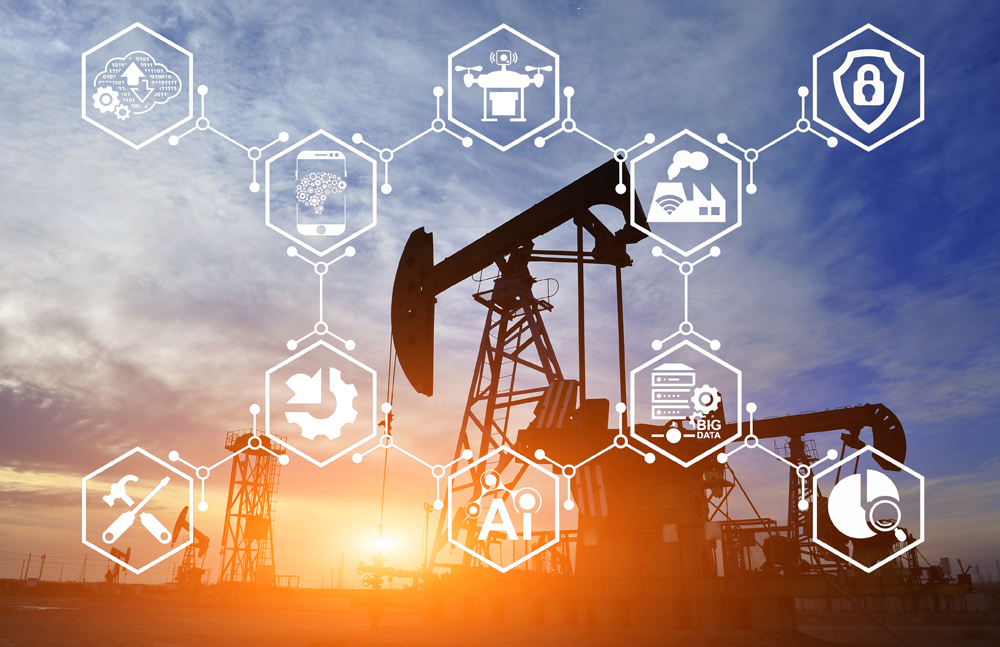
Automated drilling
Automated drilling enhances the efficiency, accuracy, and safety of drilling operations in the oil and gas industry. It stands out as a significant upstream innovation for the past decades. This approach involves the integration of sensors, data analytics, and control systems to monitor and control drilling processes in real-time in order to minimize human intervention and optimize performance. By automating repetitive tasks and mitigating human error, this innovation enhances operational reliability and safety, ultimately driving down costs and increasing productivity in the upstream sector.
Fiber optics
Fiber optics refers to a technology that uses thin, and flexible strands of glass or plastic fibers to transmit data, especially in the form of light signals. This innovation has played a crucial role in revolutionizing communication and data transfer within the oil and gas industry. In the context of the oil and gas sector, fiber optics are extensively used for various applications, such as downhole sensing, well monitoring, and reservoir surveillance.
By taking advantage of fiber optic cables, operators can collect real-time data on temperature, pressure, flow rates, and other critical parameters, enabling precise reservoir characterization and optimized production strategies. Fiber optics facilitate remote monitoring and control of drilling and production operations and enhance operational efficiency and safety. This technology has significantly advanced the capabilities of upstream operations and has enabled operators to make informed decisions and maximize the recovery of oil and gas reserves.
Seismic processing
Seismic processing is a fundamental technique in the oil and gas industry used to interpret subsurface geological structures and identify potential oil and gas reservoirs. This method involves the acquisition and analysis of seismic data, which are generated by sending sound waves into the earth and recording the echoes that bounce back to the surface.
These seismic waves travel through different rock layers at varying speeds, providing valuable information about subsurface geology, including rock types, fluid properties, and structural features. Seismic processing techniques, such as migration and velocity analysis, are applied to enhance the quality and resolution of seismic images, allowing geoscientists and engineers to accurately map subsurface formations and make informed decisions about exploration and drilling activities. Seismic processing plays a crucial role in reducing exploration risks, optimizing well placement, and maximizing hydrocarbon recovery, making it an indispensable tool in the upstream oil and gas industry.
Advanced fracture modeling
Advanced fracture modeling has been a significant upstream innovation since 1999. This approach involves the use of numerical models, often based on finite element or discrete element methods, to analyze the complex interaction between fluid injection, rock mechanics, and fracture propagation during hydraulic fracturing operations. By incorporating detailed geological data, reservoir properties, and fluid behavior, these models can predict the geometry, dimensions, and conductivity of induced fractures, and thus optimize well placement, complete designs, and production strategies. Advanced fracture modeling enables engineers to simulate various scenarios, assess the impact of different parameters, and optimize fracture treatments to maximize hydrocarbon recovery while minimizing environmental risk and operational costs.
Perforations
This technique is crucial for optimizing production rates and maximizing recovery from reservoirs. Perforation is typically performed using specialized tools such as perforating guns, which are lowered into the well and detonated to create openings in the casing and formation. These perforations allow oil and gas to flow from the reservoir into the wellbore, where it can be collected and brought to the surface for processing. By strategically perforating specific intervals along the wellbore, engineers can target productive zones within the reservoir and enhance overall production efficiency. Perforation is a fundamental step in the completion process of oil and gas wells, contributing to the successful development and exploitation of hydrocarbon reserves.
Conclusion: new technologies in the upstream industry
Walking on the border of technology and innovation has always been the most important factor in the HESCo Group. Thus, we are believed by our cooperators and customers as one of the best in this sector. We, at HESCo Group, try to facilitate the use of the most innovative technologies to overcome these challenges in the oil and gas industry. Our reliability and credit are branded to companies in the oil and gas industry worldwide. If you have any questions regarding our group, its expertise, its commitment, and the innovations and technology that we use do not hesitate to contact us!